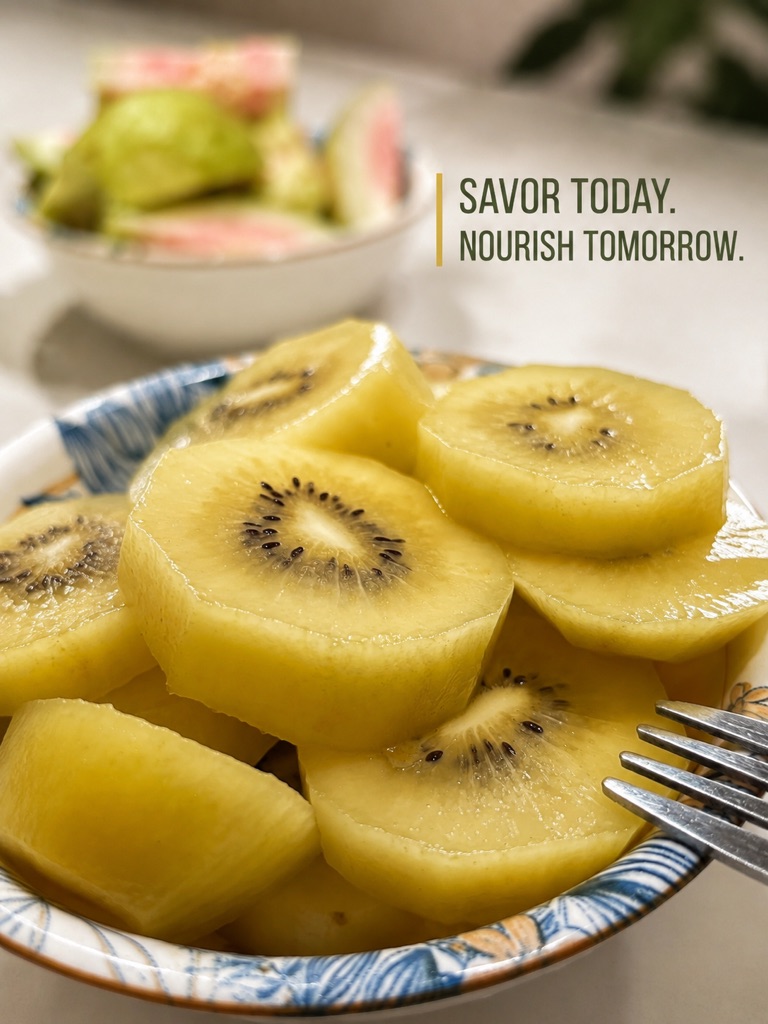
The yellow kiwi slices in the photograph are glossy, bright and ready for a fork. Behind them, another bowl of fruit turns a small snack into a generous-looking table. “Savor today. Nourish tomorrow.” is a lovely reminder that everyday eating can be both pleasurable and thoughtful.
Yellow or gold kiwi is worth choosing for its flavour and convenience as much as for its nutrients. The most useful approach is simple: buy fruit at the ripeness you need, enjoy it in a way you like and avoid purchasing more than your household will eat.
Choose for today or later in the week
Gently test the fruit rather than squeezing it hard. A kiwi that yields slightly is generally ready to eat; a firmer one needs more time. Zespri’s choosing and storage guide recommends refrigerating ripe fruit. Let firmer fruit ripen at room temperature, checking it regularly before moving it to the fridge.
For a household shopping trip, buy a mix of ready-to-eat and firmer fruit instead of a whole pack at the same stage. Keep the ripest pieces where you will notice them first. This small buying habit can matter more than an elaborate storage system.
Check for damaged skin, leaking areas or obvious spoilage before buying. Compare the cost per piece as well as the pack price, and think about when you will serve it. A larger pack is only good value if it fits your actual week.
What yellow kiwi contributes nutritionally
Gold kiwifruit can provide substantial vitamin C, along with some fibre and potassium. As a specific example, Zespri’s SunGold nutrition table lists about 152 mg vitamin C, 1.1 g fibre and 298 mg potassium per 100 g. These figures describe that product and reference quantity; they should not be treated as exact values for every yellow kiwi or every fruit size.
The same comparison lists more fibre for green kiwi than SunGold. That does not make one the universal winner: flavour, ripeness, price and the rest of your diet all affect which is useful to you. Kiwi is a food to enjoy within a varied diet, not a detox treatment or a promise of immunity.
Three easy ways to put it on the table
For the fastest snack, wash the whole fruit, cut it across the middle and scoop the flesh with a spoon. This is a practical choice when you want minimal preparation and do not need decorative slices.
For breakfast, put sliced kiwi beside plain yogurt and oats, or serve it alongside another breakfast you already enjoy. Keep the components separate until eating if you prefer distinct textures. The goal is an easy addition, not a new routine that requires extra shopping every day.
For a simple dessert, arrange kiwi with another fruit in a small bowl. Choose colours and textures you enjoy: a soft piece of ripe fruit can sit beside something crisper. The pictured slices show that careful arrangement can make ordinary ingredients feel special without a complicated recipe.
Choose the option that fits your priorities
If sweetness and a soft texture appeal to you, try a ripe gold kiwi and decide whether you like it plain. If you prefer a sharper taste, compare it with green kiwi on another day. Buy only a few pieces for the comparison; you do not need a large fruit platter to learn your preference.
If convenience matters most, the cut-and-scoop method avoids a separate peeling step. If presentation matters, peel and slice shortly before serving. Wash the fruit before cutting and use a clean knife and board. Keep prepared fruit refrigerated rather than leaving the serving bowl out for an extended period.
Make the next purchase easier
After trying a pack, note how many pieces your household ate and which ripeness worked best. Perhaps softer fruit disappeared at breakfast while firmer pieces were forgotten. That is useful information for the next shop: buy fewer, choose a different ripeness mix or plan one specific serving occasion.
The pleasure in this photograph is uncomplicated—a bowl, a fork and fruit that is ready to enjoy. Good everyday nutrition often begins with similarly modest decisions. Choose something you like, prepare it with care and give yourself time to taste it.
Explore more small pleasures in Food & Travel.

Leave a Reply