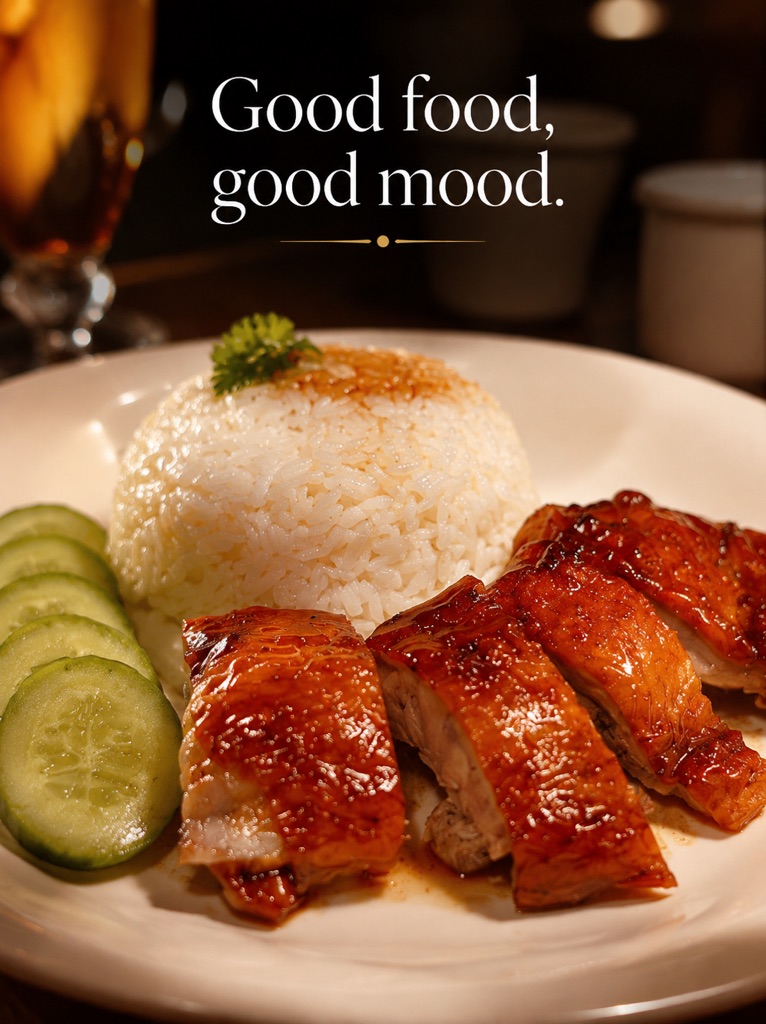
Golden chicken, a mound of rice and a few cucumber slices: the photograph captures a meal that does not need a special occasion. “Good food, good mood” describes the pleasure of knowing what you want and finding it on a plate.
Yet chicken and rice can mean very different meals. The cooking method, the rice, the sauce and the sides all change the experience. Choosing well starts with what you want today—comfort, crispness, a gentler flavour or a convenient lunch—rather than looking for a single version that is always best.
Choose the cooking style first
Poached chicken rice suits someone who wants tender meat and a relatively gentle flavour. Ginger, scallion or chilli sauces let you adjust each bite. Ask how the rice is prepared: rice cooked with stock and fat can be rich even when the chicken itself is simply poached.
Roasted chicken rice is a good choice when browned skin and deeper savoury flavours are the main attraction. The pictured plate suggests that kind of experience. If you like the contrast of crisp skin and soft rice, ask whether the chicken is freshly finished and whether sauce can come separately.
Fried chicken rice puts crunch at the centre of the meal. Enjoy it when that is what you want, while considering the rest of the order. A vegetable side and a drink you actually like may be more satisfying than automatically adding several fried extras.
Build a plate around your appetite
Start with a rice portion that matches your hunger and plans for the day. Ask for more if needed rather than treating the serving mound as a rule. Choose the chicken cut by preference: breast and thigh offer different textures, and bone-in portions take longer to eat than sliced boneless meat.
Cucumber is a refreshing contrast, but a few slices may not provide the vegetable portion you want. Consider cooked greens, a salad or a vegetable soup. Put sauces on the side if you prefer to control sweetness, saltiness or heat. These small decisions preserve the pleasure of the meal while making it fit you better.
Three practical orders for different days
For a quick lunch, try a straightforward chicken-and-rice plate with an extra vegetable side. Check the total price before adding a drink or soup; a set meal may be convenient, but only if you want what it includes.
For a slow shared meal, order chicken, rice and vegetables separately if the restaurant offers them that way. Everyone can build a plate and choose sauces. Ask about portion sizes so that a generous-looking platter does not lead to more food than the table needs.
For a home dinner, keep the first attempt simple: one chicken preparation, rice and one vegetable. Save elaborate sauces for another day. Write down what the household enjoyed so the next version improves through experience rather than becoming more complicated.
Cook chicken safely and give rice equal attention
At home, use a food thermometer: chicken should reach 74°C/165°F. Keep raw chicken and its utensils separate from ready-to-eat food. Appearance alone is not a reliable test of doneness. See the CDC chicken safety guidance.
Rice needs careful handling too. The UK Food Standards Agency’s published advice recommends cooling leftover rice quickly, ideally within one hour, refrigerating it and using it within 24 hours. Reheat only once, until steaming throughout. Divide rice into small portions for cooling rather than leaving it in a large warm pot.
Takeaway rice may already have been reheated. Eat it promptly and ask the business about its handling before planning another reheating. If you cannot establish that leftovers were handled safely, do not rely on smell or a quick warm-up to make the decision.
Notice what makes your version satisfying
Try comparing two meals on separate days. Was it the chicken texture, the rice aroma, the sauce or the relaxed setting that made the difference? A favourite meal is often a combination of small details. Once you know yours, ordering becomes easier—and a simple plate becomes something to look forward to.
Find more everyday dining ideas in Food & Travel.

Leave a Reply